








Hello World. . .
Okay, so first off. . . Spain?
Spain McMillen? You want an explanation, right?
The story, perhaps? Can't say I blame you. . .
Can't say I haven't told it a million times. So let's
just say that yes, I've been to Spain. And yes, my
last name is McMillen. I bet you can fill in the
blanks. . .
The more relavant story being. . .
the ongoing transition at Sound Event.
What is and why Sound Event? Now that deserves
telling. . .
read more / hide
Sound Event was and is the URL/trade name I first conceived of in the spring of 1999. This was some months after acquiring a new tricked out Dell PC - 450 MHz PII, 256 MB (crazy!) RAM and a 12 Gig hard drive. This machine was rocking a newly wired Qwest DSL with a 512
Kbit download. Life in my wired little Seattle First Hill apartment was a forward-looking mass of Ethernet wires and monitors.
Beside this Windows 98 box lay a very nice assembly of music gear: Mackie 1642 mixer, Taylor acoustic and Fender Stratocaster guitars, Mesa Boogie amp, Yamaha Mini disk digital 4 track, Lexicon MPX-1 and assorted microphones. This was the legacy of my original foray into Seattle – visa vie the local Grunge music scene of the early 90’s. That scene had long since burned out leaving me in a production and stage management role at Belltown’s Pampas Club.
And so Sound Event was born.
Next up was the Big Picture. That place was a trip. It was here – managing the technical aspects of the digital theatre/presentation space that I witnessed much of the Dot Com era and even the events of 9/11. Sound Event served both venues, Pampas Room and Big Picture, while back at my First Hill “World Headquarters”, I was busy deconstructing web pages, learning HTML and graphic design, selling off my music gear and taking a crack at professional webmastery by the summer of 2000.
Many sites, and clients later. . .
Sound Event stuck - although by autumn 2002 the work was
entirely web-based. Spose I could change the business name, but that would mean finding another, more appropriate (and available) .com URL. Never found one.
But the “big news” at Sound Event is that I’m going to bury myself in the world of the “technology contractor”. Sure, I’ve always been an independent contractor, but I want to get into
big web projects – much larger than what my client base can afford.
So Sound Event as it's been is no
more. . . Hopefully, this new tack will allow me to apply my ASP.Net skillset within a dev team that’s doing really hard and interesting work.
Even though Sound Event is laying low. . .
I'll still be working on my MVC2 CMS and polishing out the Event Ticket Sale system.
Will also be fiddling with various other whatnots, but for now am going to try my hand at non-Sound Event employment.
Wish me luck!
I'm currently working on the framework for an
MVC3 Content Management System.
Am in the fairly early stages of the project. Have put quite
a bit of thought into what I want it to do initially and how I'd
like to see it grow and develop. While there are already
some very nice
MVC CMS's out there (source code and all), I
believe it's important to design from the ground up.
Getting in at the ground level not only underscores the
fundamentals of the technology, but aligns the most basic
building blocks with the intent of the project.
I've got the "Project" structure laid out and am designing the
database. I want this the CMS to be neither over-wrought
with community features, nor so simple as to lack the capacity
for growth. It needs to be right-sized, deployable as
a simple CMS, yet extensible to support my E-commerce module and
other plug ins in a multi-user environment. Grasping - and
implementing - "the Zen" of MVC's code-by-convention should
result in a more streamlined and managable code base. .
. hitting both goals.
I’m not really sure what to say about this project. . . On the one hand, it’s a
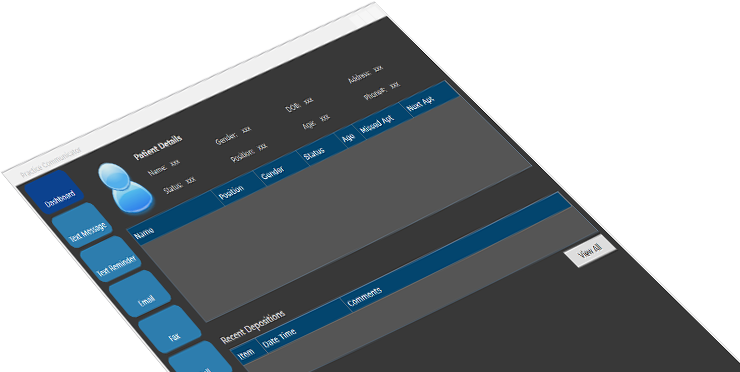
highly successful calendar-based ticket sale system. In its first year (2010) it automated a record number of individual cruise ticket sales for Waterways Cruises in Seattle - this during a still less-than-ideal economy. In fact, I should stop right there. . . Waterways is delighted, and user reviews have been uniformly warm and receptive. Here’s an
excerpt of its creation – although some details are not fully accurate.
For one, it’s actually all my code - although
Waterways played an integral role in its design. It’s the third and fully-formed execution of a ticket sale system for Waterways Cruises. The first two systems were built in 2004 and 2006. But this build is far more ambitious than earlier attempts (or budget allowed) and was actually funded largely by Sound Event, with Waterways Cruises contributing for a developer’s license. Waterways played a key role, and it was delivered highly customized to their specific business needs.
But it’s only the start of a larger project - one that unites with my under-construction CMS.
And in fact, the ticket sale system itself has an
administrative backend that’s not completely featured.
It’s in version 1.0 right now. . . and I very much
want to get it to version 2.0. For this, I suspect
I’ll need new clients to deploy it – thus funding its
future development. Interested?
Soundevent.com is also undergoing a re-spin.
Have moved to a new site host:
Arvixe.com.
Their shared (affordable) ASP.Net packages support multiple
MSSQL database instances - a rare find.
For this current spin, am working in Photoshop (as usual) and
doing the ASP, XHTML, and CSS in
Microsoft Expression Studio 4.
Given my preferred platform is Visual Studio 2010, I'm not sure why Expression, other than to give
it a try and gain familiarity. I miss VS2010, or even
Dreamweaver, but Expression is becoming more viable and one
needs to know their way around it, I suppose. It's going.
. . oh. . . kay, so far.
I do like firing it up and not feeling nervous that
I've launched a monster like Visual Studio which is busy
doing so manys tasks in the background
that you never know when it will crash or sieze up
Windows. Fortuantely VS2010 and Win7 seem almost
rock solid. But little Expression Web feels
even lighter and easier to leave open and forget about
while doing other important things elsewhere. For
a simple site, with little or no ASP.Net/SQL, it's not a
bad way to go. I will mention that it does mess
with my code a bit (cough, FrontPage!), but merely
introduces code line breaks unnecssarily - which hurts
code readability. . . but that's important to me
as I'm primarily a hand coder.
UW Advanced Wed Development
is into it's final (spring) quarter. Amazing, or
perhaps not, the
class has weeded down from some 40 students at the
beginning of the course to just 12. These are the
survivors, the hungry, the unemployed. . . and
deserve credit for hanging in there and pushing
themselves.
This quarter deals with security and
web services in ASP.Net. The .Net Framework and
Visual Studio provide excellent support for both - web
services espeically. We'll also review AJAX and
Silverlight, though we covered them last quarter.
Of special interest to me is MVC
(obviously). As luck would have it, the instructor
will be out of the country for that course and
I've been asked to stand in.
Should be fun.
Here's what
I wrote back in Autumn. . .
I'm the TA for the
class, and am in the process of reviewing student
submissions. I'm always amazed (aghast?) at the
vast difference in skill level in this course.
Don't get me wrong, most students in class are very experienced
C#/SQL programmers and are there to apply their skills to the
web.
But some are stumbling along, not fully
comprehending C# or the principals of Object Oriented
Programming. I enjoy helping these students, but worry
that they'll get through the program without mastering vital
concepts - and worse -
get hired somewhere
and cause some unsuspecting business a lot of pain. . .
but at this point, I do whatever I can to help them
learn OOP in C#.
http://websales.waterwayscruises.comA calendar-based cruise ticket sale system - built from the ground up, it uses ADO.Net for maximum performance and scalability.
The straightforward order process is praised for its user friendliness.
Its apparent simplicity belying a plethora of features:
- • Creation of scheduled
Cruise Series w/individually assignable -
- • Ticket types and prices
- • Entrée selection per ticket type
- • Cruise enhancements
- • Gratuity & other required fees
- • Promotional codes
- • Photography, maps &
other resources
Sales system also supports the sale and redemption of
third part gift cards like GivEx or ProfitPoint in addition to credit cards. All transactions are perfromed by secure web services.
Account system allows for Concierge or other Agent booking/tracking, and a call center override mode allows unlimited flexibility in bookings.
Admin access rights allow roles-based authorization.
Sales tracking and manifests manages inventory, individual order requirements, as well as kitchen production
sheets and sales figures – all through the
administrative backend.
http://www.waterwayscruises.comThis site is a skinned on a
PHP CMS by Seattle’s
Montana Banana. I’m responsible for much of its graphic design,
consulting and project management.
I’ve enjoyed a long, creative career w/Waterways Cruises acting as their
IT staff, webmaster and primary
graphic designer for all types of media.
Waterways has a very active marketing & sales department and a desire to leverage the latest web technologies for their staff, clients and marketing efforts.
For CRM activity, the web site hosts email sign up forms, client RFP questionnaires and is at the receiving end of actively managed PPC campaigns through
Google Adwords. Additionally, all print media also serves to funnel new contacts online where various channels lead to live sales persons (via
LivePerson chat, phone or email) or into opt-in client database for subsequent email campaigns.
The resulting effort succeeds in engaging a wide range of potential new customers, while qualifying them according to
their interests and connecting them with the appropriate sales persons via their preferred communication technology.
http://www.pontiseafoodgrill.comThis site was designed by
Tatu Digital, and I develop its content presentation, maintain its
Flash and XHTML. Working closely with Ponti’s marketing director, we’ve evolved a print and online ad look borrowing from the site style while adding some extra polish & shine.
Ponti is particularly active in email marketing and enjoys a large subscription base for their regular
Constant Contact email campaigns. They’re also active on
FaceBook, Twitter and localized restaurant-oriented sites like
seattle.citysearch.com.
Using Constant Contact, like my other clients, requires
the creation of graphic templates in
Photoshop.
Email copy is written, photos chosen (sometimes), and a process of composition, image chopping and XHTML/CSS modification occurs for each campaign. Constant
Contact allows click tracking features only if the email code is XHTML valid, and of course, many email clients still execute CSS unpredictably.
The result of which is a “retro tech” XHTML template which borrows from web 1.0 layout conventions, but displays consistantly in a wide variety of email clients.
Like other clients of mine, Ponti also employs
Google Analytics to track user behavior and goal pages (reservation request form) reached.
http://www.piuskb.comPius was a new company with no more “identity” assets than a logo - and even that was abandoned during the site design process.
Their showroom floor was under construction, and customers milled around as I helped them set up their computer network and
QuickBooks point-of-sale/accounting system.
The store owners spoke multiple Chinese languages (but little English). . . It was clear what challenges awaited.
First off was to conservatively define an identity – Company colors, look and feel. Being conservative here was important because if the web site struck too boldly in any direction, its look could become quickly outdated as more marketing collateral was added over time.
Second was the language barrier. Pius serves an international community of construction contractors with varying degrees of English literacy - best to keep it visually descriptive. Towards this end, much onsite photography was done under less than ideal circumstances.
Enter Photoshop, with its ability to custom-warp geometry corrections for lens distortion, correct for color temperature from various light sources, and hand touch other light factors. A series of mouseover galleries were created that allow effortless browsing of store inventory.
http://www.classiccatering.comEvery webmaster eventually finds themselves in this type of scenario. . . Before you sits a nice person (old friend/new client, doesn’t matter) who’s asked you to create or update a web site for them.
Great news. . . except for the fact that they’re busy being successful, have little or no graphic assets, photography, site copy and no time to actively invest in the site. You’re on your own and often with budget that’s rather modest.
Classic Catering simply wanted to update their old 1990’s web site (think, animated GIF’s). The have some company assets which are simple, and. . . well, classic in appearance. So we sat down with a memory card of snap shots, a logo and business card and “agiled” our way through some design decisions.
The result was a simple site that reflects their existing marketing assets. There’s a nice Flash slideshow gallery, and a sincere tone throughout. Classic is a relatively small (but successful) family-owned catering company, and I hope their site reflects that.
The site code employs the latest XHTML/CSS techniques – including SEO friendly “trifecta” image links - and should be a breeze to update when that day eventually arrives.
http://www.lobstershop.com
If you don’t have any specific memories of Internet Explorer 6, 5, 4. . . allow me to share mine. In the early half of this decade,
the world’s most widely used browser (by much wider margins than today), was somewhat of a basket case with regard CSS rendering.
Oh, you could try and be a “good webmaster”, employing CSS whenever possible. But you’d also have to manage a dual code base – one for IE, and one for everyone else. Fortunately, the situation is much better today.
This site was designed and built just prior to the salvation brought by IE 7. It employs tables for layout (essential for email campaigns, even today), yet conveys a certain architectural quality to its
design that echoes faithfully the atmosphere at Commencement Bay.
Light years ahead of its predecessor, design-wise, my own photography was combined with a good archive supplemented by the excellent food photography of,
Ilya’s Photography. The Lobster Shop was nothing short of rebranded by virtue of its new web site design.
Like many past clients, the Lobster Shop doesn’t have a need to maintain or develop their web site. As my career takes me deeper into the complexities of application development, I’ll miss the experience of working directly with business owners brainstorming their “new” identity.